Solar signage procurement works best when the energy system and the information task are specified together. A suitable display for a shaded campus entrance may differ from one placed in an open visitor plaza. Before asking suppliers to quote, prepare a short site assessment that gives each bidder the same operating assumptions.
Start with the content and schedule
Describe what the screen will show, how often it changes and when people need to read it. Separate static notices, periodic transport updates and motion content. Record daily operating hours, any overnight requirements and how the display should behave when available energy is limited. These choices become inputs to the power proposal.
Record the installation conditions
Provide the location, photographs and a simple plan of nearby buildings and trees. Ask the engineering team to review seasonal shading and local solar conditions. Include mounting constraints, service access, communications coverage and any restrictions on panel position. A claim of off-grid operation should be assessed for the intended site and workload.
Check the complete energy budget
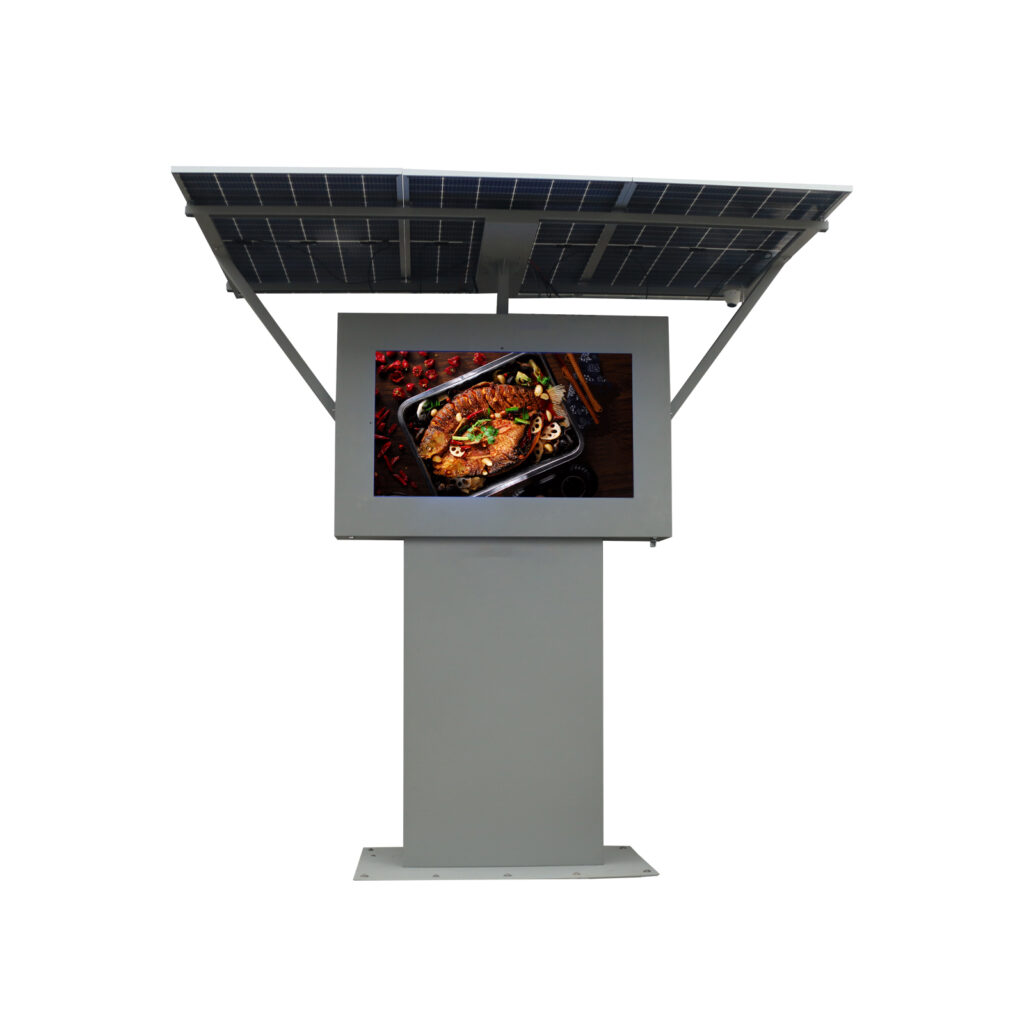
A solar signage system can combine panels, charge control, battery storage and a display. The assessment should also include the player, modem, lighting and other connected equipment. Ask the supplier to state the assumed load, storage design and operating behavior during low-sunlight periods. For e-paper proposals, include refresh frequency and communications demand in that discussion.
Compare proposals on shared assumptions
Give suppliers the same content sample, schedule and required service window. Request a configuration-specific drawing and datasheet, together with the assumptions behind the power design. Identify which equipment is included, which installation work belongs to the local contractor and which conditions require a revised proposal.
Plan the handover
Agree who checks batteries, cleans accessible surfaces, publishes messages and responds to faults. Ask for commissioning records, maintenance instructions and a list of replaceable components. A useful acceptance review checks both information visibility and the documented power behavior of the selected configuration.
For an initial project discussion, send the installation country, site photographs, quantity, operating schedule and sample content. Clear inputs make it easier to compare practical proposals and identify the questions that need engineering confirmation.
Related products
Solar-Powered Outdoor Digital Signage · Solar-Powered E-Paper Information Display